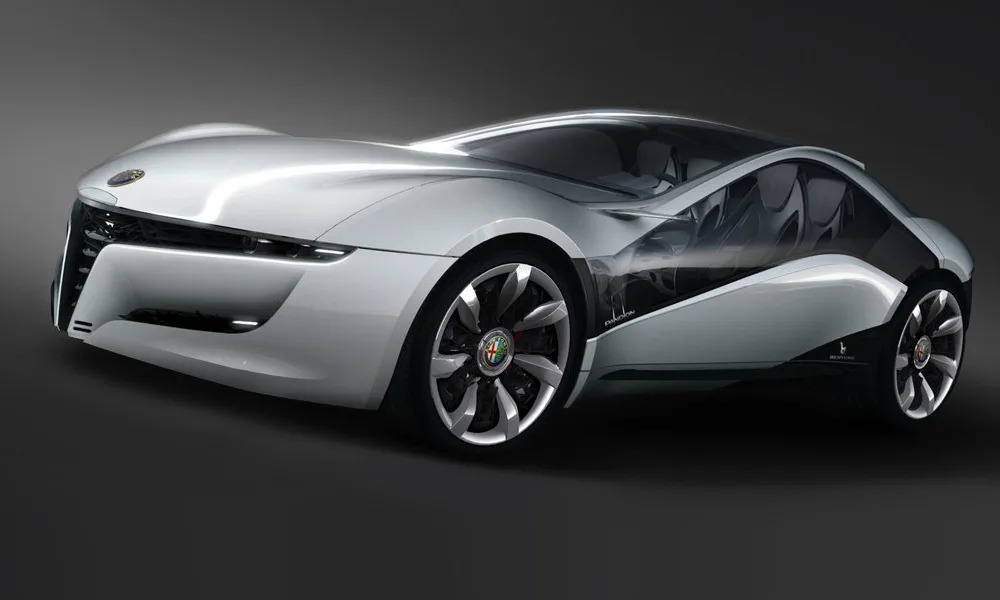
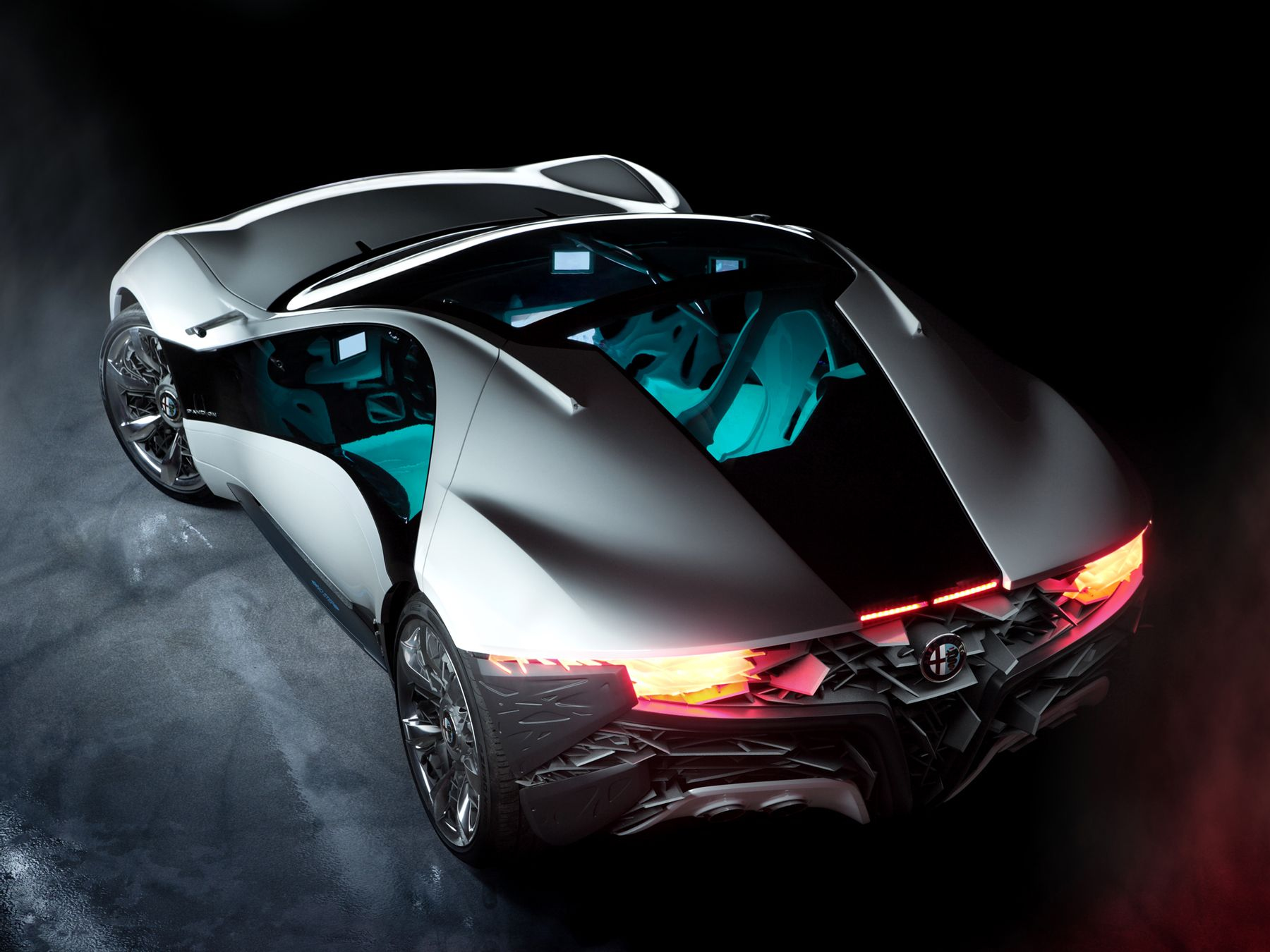
Alfa Romeo Pandion (2010): key specifications
General information
-
Model: Alfa Romeo Pandion
-
Type: concept car
-
Manufacturer: Bertone (for Alfa Romeo)
-
Year of debut: 2010
-
Show debut: Geneva Motor Show 2010
-
Purpose: tribute to Alfa Romeo’s 100th anniversary
-
Designer: Michael Vernon Robinson (Bertone)
-
Class: 2‑door coupe (4‑seater)
-
Layout: front‑engine, rear‑wheel drive (FR)
Engine & performance
-
Engine: 4,7 L DOHC 90° V8
-
Displacement: 4691 cm3
-
Power: 450 hp (331 kW)
-
Top speed: 320 km/h (199 mph)
-
0–100 km/h acceleration: 3,9 seconds
-
Transmission: not specified (presumed manual or automatic)
-
Drive type: rear‑wheel drive (RWD)
Dimensions & weight
-
Length: 4620 mm
-
Width: 1942 mm
-
Height: 1284 mm
-
Wheelbase: 2650 mm
-
Curb weight: 1258 kg
Design highlights
-
Doors:
-
open upward at 90 degrees;
-
span the entire side (from front to rear fender);
-
automatically detach in a crash for safe egress.
-
-
Rear styling:
-
“crystal blade” motif — a cluster of angular, faceted elements;
-
futuristic taillight design integrated into the blade array.
-
-
Front end:
-
Alfa Romeo “quad” headlights deeply recessed into a T‑shaped grille;
-
long hood emphasizing sporty proportions.
-
-
Exhaust:
- aggressive quad‑square tailpipes supported by side panels.
Interior & technology
-
Seats: ultra‑thin carbon‑fiber units with integrated “Fabric Lightbulb” ambient lighting;
-
Floor: backlit for a weightless, futuristic feel;
-
Materials: high‑tech carbon fiber and premium finishes;
-
Theme: a blend of Alfa Romeo heritage and radical futurism.
Platform & origins
-
Base vehicle: Alfa Romeo 8C Competizione;
-
Engineering: aluminum chassis and drivetrain from the 8C;
-
Development: fully functional prototype (not just a styling model).
Key notes & legacy
-
Inspiration: named after the Pandion (osprey), a bird of prey that symbolized speed and precision — reflected in the car’s sharp lines and dynamic stance.
-
Historical context:
-
created to celebrate Alfa Romeo’s centenary;
-
part of Bertone’s legacy of avant‑garde concepts (following the Alfa Romeo Carabo, 1968; Lancia Stratos Zero, 1970; Lamborghini Countach, 1972).
-
-
Impact:
-
never entered production, but remains a landmark in automotive design;
-
showcased Bertone’s mastery of radical yet functional concepts;
-
continues to inspire discussions about Alfa Romeo’s design language and futuristic vision.
-