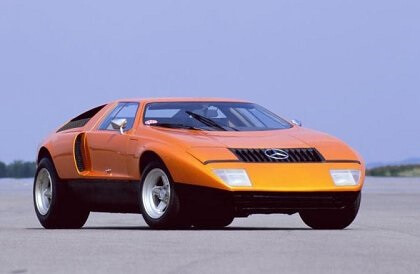
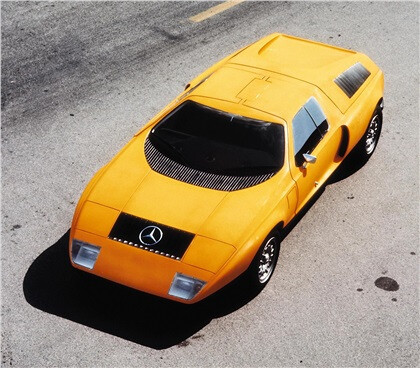
The history of this supercar began right after the retirement of the iconic W198 . At the beginning of the 60s, the Mercedes design office was tasked with preparing a project for a sports two-seater car that would become the ideological successor to the 300 SL. It is still unknown why Mercedes-Benz needed such a car (perhaps the Germans wanted to compensate for the transformation of the SL model into a luxury walking roadster with a supercar), but the project officially started, and the legendary Paul BrThe second reason is progressive technology. The C111 was based on an original frame with a steel “tub” floor section. From above it was covered with fiberglass panels, and the choice of fiberglass was justified not so much by the desire to reduce the weight of the car (which ultimately amounted to 1100 kilograms), as by experimental goals - Mercedes-Benz engineers wanted to find out how suitable the composite is for everyday use … when this very operation includes regular motorway exits and driving at speeds over 200 kilometers per hour.
The C111 was indeed capable of high speeds thanks to a three-section rotary piston engine mounted behind the backs of the riders. The motor power was 280 horsepower. Considering that the bodies of all prototypes, starting with the Design Study, were blown in a wind tunnel, the 1969 C111 turned out to be very streamlined, which contributed to its high top speed - 260 kilometers per hour.aque was at the helm.